
Lifelong Social Bonds Keep the Aging Brain Sharp and Flexible
Summary: Rats that lived in social groups throughout their lives retained youthful memory and mental flexibility well into old age, according to new research. Even with equal physical stimulation, only socially connected rats performed as well as younger ones on complex memory tests, while isolated rats showed significant decline. Brain imaging revealed stronger hippocampal activity […]
Compound Could Repair Nerve Damage in Multiple Sclerosis
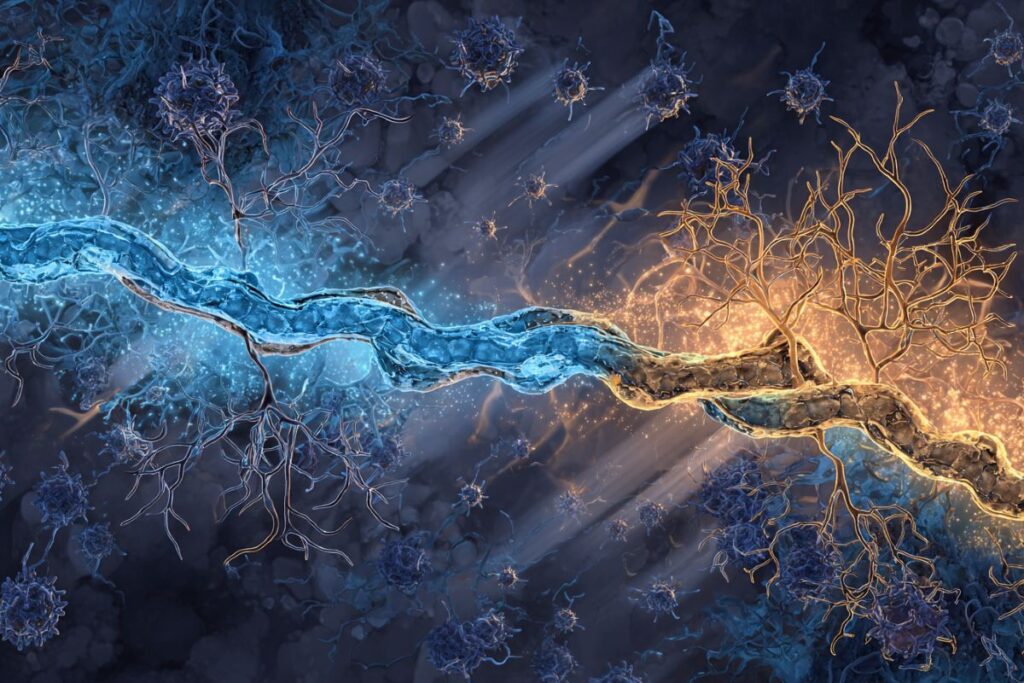
Summary: Researchers have identified two compounds capable of repairing the protective myelin sheath damaged by multiple sclerosis, a major advance toward reversing nerve injury rather than just slowing it. The lead compound, K102, not only promotes remyelination but also balances immune function—key for long-term neurological recovery. In animal and cell studies, it restored myelin-producing cells […]
Hunger, Fear, and the Brain’s Hidden Switch to Turn Off Chronic Pain
Summary: Chronic pain affects nearly 50 million Americans, yet new research reveals the brain may have an internal switch that can turn it down. Scientists identified a group of neurons in the brainstem that regulate long-term pain by integrating signals related to hunger, fear, and thirst. When survival needs take priority, these neurons dampen pain […]
Social Inference Could Be the Key to Healing Schizophrenia
Summary: Researchers have identified a brain function that could transform how schizophrenia is treated—by focusing on social inference, the ability to interpret social cues and intentions. The study found that strengthening this skill early can help young patients regain independence and prevent long-term cognitive decline. Rather than relying solely on memory or attention training, social […]
Human Brain-on-a-Chip Reveals How Inflammation Breaks the Mind
Summary: Researchers have developed brain-on-a-chip technology that uses human tissue to model how the brain’s protective barrier breaks down during inflammation and disease. The system replicates the blood-brain barrier, showing how cytokine storms and leaked blood proteins can trigger harmful changes in brain cells. A second study revealed that pericytes, tiny support cells, can repair […]
Why Comfort Food Feels Like Medicine for People in Chronic Pain

Summary: A new study reveals that more than two-thirds of people living with chronic pain turn to comfort foods—especially chocolate—for emotional relief and distraction during flare-ups. Eating provides temporary pleasure and even mild pain relief, likely due to biological effects of high-calorie foods on the brain’s reward and pain systems. However, this short-term comfort can […]
Why Older Fathers Pass on More Harmful Mutations to Their Kids

Summary: Groundbreaking research has revealed that as men age, harmful genetic mutations in sperm not only accumulate but are also favored during sperm production, giving them a reproductive advantage. Using ultra-accurate DNA sequencing, scientists found that sperm from older men were significantly more likely to carry disease-causing mutations, including those linked to neurodevelopmental disorders and […]
Reelin Shows Promise for Healing Both Gut and Depression

Summary: A new study reveals that the protein Reelin may hold the key to treating both “leaky gut” and major depressive disorder. Chronic stress lowers Reelin levels in the gut, weakening the intestinal barrier and allowing toxins to trigger inflammation that worsens depression. Researchers found that a single injection of Reelin restored normal levels, strengthening […]
Five Sleep Types Revealed: How Your Brain Wiring Reflects Rest

Summary: A new study has identified five distinct “sleep-biopsychosocial” profiles that connect how we sleep with our brain networks, mental health, cognition, and lifestyle. Using data from over 700 participants, researchers found that different sleep patterns—ranging from poor quality to resilience and short duration—each showed unique neural connectivity patterns. For instance, those with poor sleep […]
Tiny Peptide Shows Powerful Brain Healing After Traumatic Injury

Summary: A small peptide called CAQK, composed of just four amino acids, has shown remarkable neuroprotective effects in mouse and pig models of traumatic brain injury. When injected intravenously, CAQK travels directly to damaged brain tissue, where it binds to overexpressed proteins and reduces inflammation, cell death, and tissue damage. Treated animals displayed improved memory […]