
How Teens and Adults Really Change Language

Summary: For decades, scholars believed children’s speech errors were the seeds of language change, but new research challenges that view. The study argues that everyday language use among adolescents and adults, not children, is the real driver of linguistic evolution. Children typically recover from their mistakes, which rarely spread, whereas adults adapt and innovate in […]
Prosthetic Hand Restores Real Sense of Touch

Summary: A next-generation neuroprosthetic hand that restores a sense of touch is moving into a pivotal home-use clinical trial. The “iSens” system uses implanted electrodes to read muscle intent and stimulate nerves, relaying fingertip sensations to the brain so the prosthesis feels embodied. Twelve participants will live with both their standard device and the sensory-enabled […]
Artificial Sweeteners Tied to Faster Cognitive Decline

Summary: A large study of nearly 13,000 adults found that consuming high levels of certain artificial sweeteners is linked to faster declines in memory and thinking over eight years. The effect was particularly strong in people with diabetes and those under 60. Some sweeteners, like aspartame and saccharin, were strongly associated with decline, while tagatose […]
Humans and AI Share Similar Learning Strategies
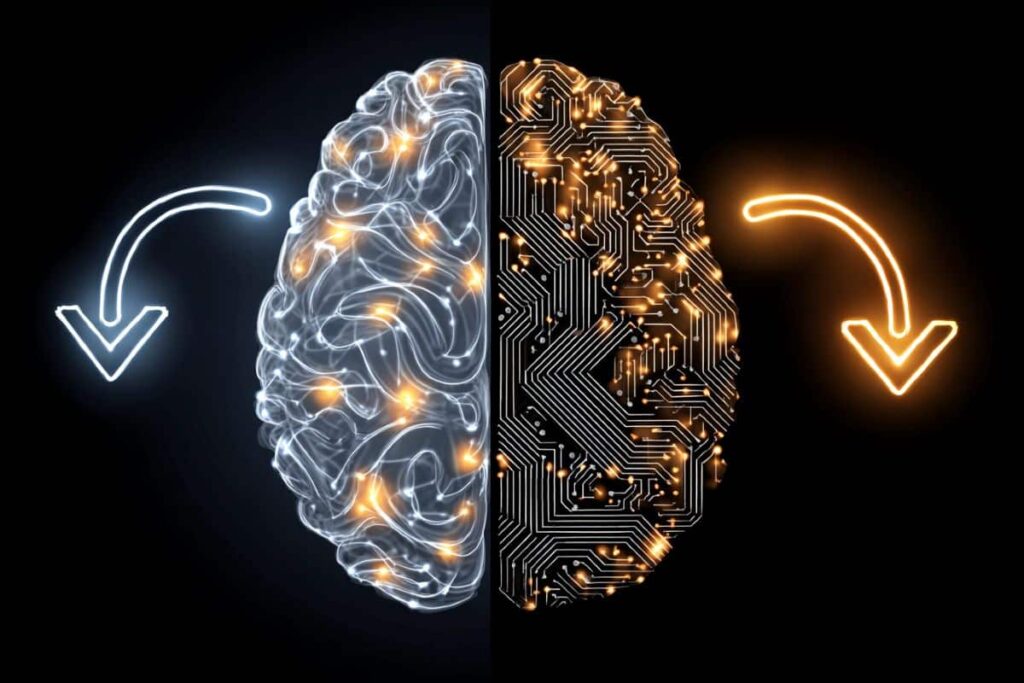
Summary: Researchers found that humans and AI share a similar interplay between two learning systems: flexible, quick in-context learning and gradual incremental learning. Experiments showed that AI could develop in-context learning abilities after extensive incremental practice, much like humans do. Both also displayed trade-offs between flexibility and retention, with harder tasks strengthening memory while easier […]
Air Pollution Linked to Toxic Protein Clumps Driving Lewy Body Dementia

Summary: A new study reveals a molecular link between fine particulate air pollution (PM2.5) and Lewy body dementia, a devastating neurodegenerative condition. By combining human epidemiological data and animal experiments, researchers showed that PM2.5 exposure triggers toxic clumps of alpha-synuclein in the brain, similar to those seen in patients. Mice exposed to pollution developed brain […]
Breast Milk Has a Built-In Body Clock for Babies

Summary: Breast milk is more than nourishment—it delivers circadian cues that may shape infant sleep, immunity, and metabolism. Researchers analyzing milk samples found that melatonin peaked at night and cortisol in the early morning, while other immune-related proteins remained steady. Infants younger than one month received higher concentrations of protective compounds such as IgA and […]
Brain Structure Differences in Children with ADHD Discovered
Summary: Researchers tested a new MRI correction method, called the traveling-subject (TS) approach, to resolve inconsistencies in ADHD brain imaging results. By scanning the same healthy subjects across multiple MRI machines, they identified and corrected for measurement biases, producing more reliable data. The study revealed that children with ADHD show reduced gray matter volume in […]
Environment Shapes Autism-Linked Social Behaviors

Summary: A new study shows that environment significantly affects social behavior in zebrafish carrying a mutation linked to autism. In stressful, white Styrofoam tanks, the fish displayed higher anxiety and less social contact, while in familiar Plexiglass tanks their sociability improved. Brain mapping revealed altered neural activity and sensory pathway abnormalities tied to vision, explaining […]
Dietary Intervention Could Slow Deadly Brain Cancer Growth
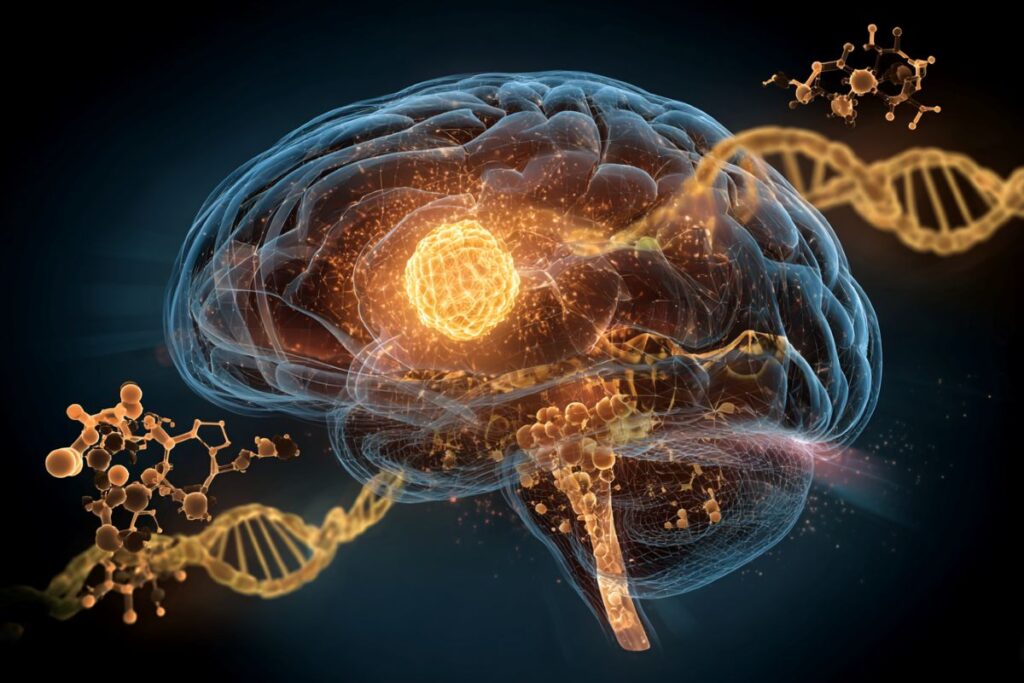
Summary: A new study reveals that glioblastoma, the most aggressive brain cancer, thrives by using sugar in unique ways that differ from healthy brain cells. While normal brain tissue channels sugar into energy and neurotransmitters, glioblastoma cells divert it into producing DNA and RNA, fueling relentless tumor growth. Researchers showed that restricting key amino acids […]
Metal–Organic Framework Neurons Mimic Brain Signals with Dopamine

Summary: Researchers have developed the first metal–organic framework (MOF) neuron that mimics brain-like behavior in aqueous environments by responding to dopamine. Unlike traditional solid-state devices, this MOF neuron reproduces key neural functions such as synaptic plasticity, integrate-and-fire signaling, and dopamine-tuned spike modulation. In a proof-of-concept experiment, researchers used the neuron to control a robotic hand, […]