
Emotional Events Rescue Weak Memories, Making Them Last Longer

Summary: A new study reveals that emotionally charged or surprising events can retroactively and proactively rescue weak memories, ensuring they persist. The brain doesn’t just preserve the striking moment itself, but also mundane experiences connected to it, depending on timing and similarity. Researchers demonstrated that the mind prioritizes fragile memories in a graded fashion, with […]
Hearing Trouble in Crowds Linked to IQ, Not Ears

Summary: New research challenges the assumption that difficulty hearing in noisy places is always linked to hearing loss. Instead, the study found that cognitive ability is strongly tied to how well people process speech amid background chatter. Participants with autism, fetal alcohol syndrome, and neurotypical individuals all showed the same pattern: higher intellectual ability meant […]
Positive Memories Boost Musicians’ Performance by Reframing Stress

Summary: A new study reveals that recalling positive memories before stepping on stage can significantly boost musicians’ performance. Professional wind instrumentalists who reflected on positive experiences showed higher nervous system activity, greater emotional positivity, and stronger arousal compared to those recalling negative or no memories. These physiological and psychological changes led to better self-rated and […]
Early Clues to Autism and Schizophrenia Risk Found in DNA
Summary: Researchers have built a detailed map of DNA methylation changes in nearly 1,000 human brains from six weeks after conception to old age. The work reveals dramatic epigenetic shifts before birth that guide the formation of the brain’s cortex, which supports thought, memory, and behavior. Crucially, genes tied to autism and schizophrenia showed strikingly […]
Unlocking How Early Life Shapes the Brain
Summary: The first major data release from the HEALthy Brain and Child Development (HBCD) Study has provided researchers with a groundbreaking resource to study early childhood brain development. This release includes detailed biomedical and behavioral data from more than 1,400 mothers and children, spanning pregnancy through nine months of age. By combining brain imaging, EEG, […]
Gut Microbes May Hold the Hidden Key to Why We Sleep

Summary: A new study shows that bacterial cell wall molecules, specifically peptidoglycan, are present in the brain and fluctuate with sleep cycles. This finding supports a hypothesis that sleep is not solely brain-regulated but arises from the interplay between the body and its microbiome. Researchers propose this “holobiont condition” model, where microbial and neurological systems […]
Brain Reveals Attention Works Like a Zoom Lens
Summary: A new study shows that our brain’s attention system first prepares broadly, then zooms in on specific details within fractions of a second. Using EEG and machine learning, researchers tracked how people focused on either the color or movement of dots before they appeared. They found that general features were registered in about 240 […]
Blood Tests Could Predict Spinal Cord Injury Severity and Survival
Summary: A new study shows that routine hospital blood tests could help predict spinal cord injury severity and survival chances. Researchers used machine learning to analyze data from thousands of patients and found that patterns in blood markers, such as electrolytes and immune cells, forecasted recovery outcomes as early as one to three days after […]
Human Stem Cell Transplants Boost Vision in Advanced Dry AMD
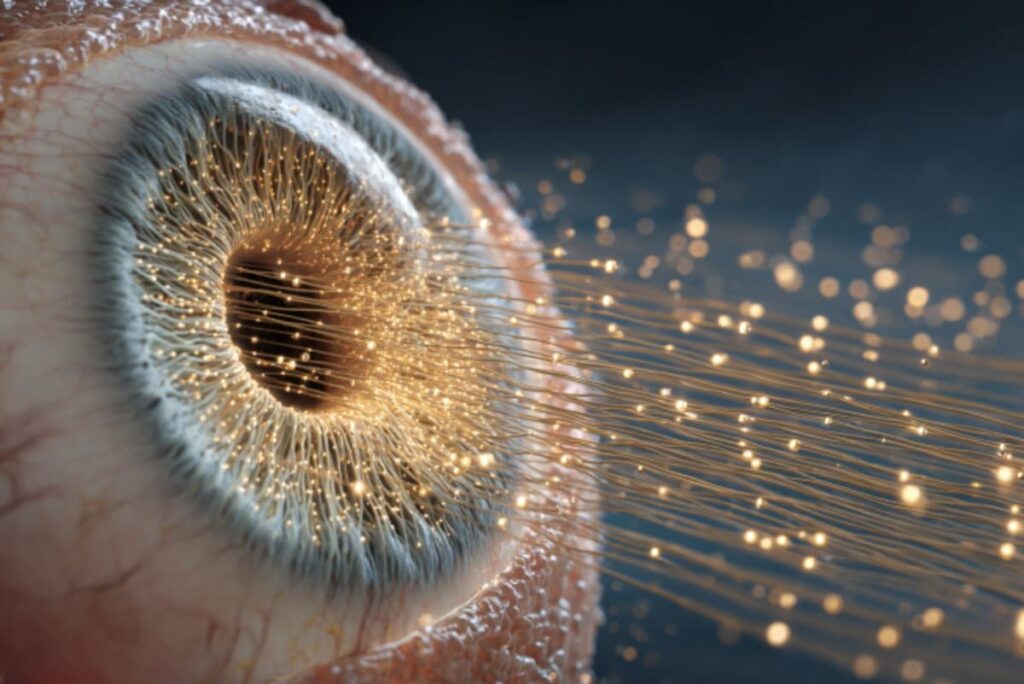
Summary: A new clinical trial suggests stem cell therapy may restore vision in people with advanced dry age-related macular degeneration, a disease that currently has no cure. Researchers transplanted retinal pigment epithelial stem cells, derived from adult postmortem eye tissue, into patients’ eyes. The treatment was safe and led to surprising vision improvements, with some […]
Brain Waves During Sleep Are Driven by Neural Excitability
Summary: New research shows that slow oscillations in the brain, which occur during deep sleep and anesthesia, are guided by neuronal excitability rather than structural anatomy. Using computational models and experiments in mice, scientists demonstrated that the most excitable brain region directs the flow of these waves, like a leader setting a trend. By artificially […]