
How the Brain Learns New Facts About Imaginary Worlds

Summary: Learning new information about the world—like details from a fantasy realm—engages brain regions distinct from those used to recall personal experiences. In a new study, participants learned fictional facts about imaginary civilizations and were later tested on what they remembered. Brain scans revealed specific areas that encoded semantic information about people and places, with […]
How Storytelling Style Shapes the Way the Brain Forms Memories
Summary: The way an event is described—through feelings or sensory detail—changes how the brain stores and recalls it. In this study, participants listened to stories that emphasized either conceptual details (thoughts and emotions) or perceptual details (sights and sounds). Brain imaging showed that these two types of narratives activated distinct memory networks, which later predicted […]
Theta Brain Waves Act Like Radar to Boost Visual Working Memory
Summary: New research shows that the brain’s ability to detect subtle visual changes—like spotting an anomaly on a security monitor—depends on theta-frequency brain waves (3–6 Hz) that rhythmically sweep across the cortex. These traveling waves act like a radar, scanning different parts of the visual field and influencing when and where attention peaks. The study […]
First Signs of Multiple Sclerosis Found Years Before Symptoms
Summary: Researchers have traced the earliest stages of multiple sclerosis (MS), showing that the immune system begins attacking the brain up to seven years before diagnosis. By analyzing over 5,000 blood proteins, they identified molecular signs of damage to myelin—the protective sheath around nerve fibers—long before symptoms emerge. Key biomarkers such as IL-3 and MOG […]
Electronic Eye Implant Restores Reading Vision in AMD

Summary: A groundbreaking European trial has shown that a new electronic eye implant, paired with augmented-reality glasses, can restore reading vision to patients blinded by geographic atrophy from dry age-related macular degeneration (AMD). The device, called the PRIMA System, enabled 84% of participants to read letters, numbers, and words through previously sightless eyes. The ultra-thin […]
Why AI Conversations Still Sound Fake

Summary: A new study comparing human and AI-generated conversations reveals that large language models like ChatGPT and Claude still fail to convincingly mimic natural human dialogue. Researchers found that these systems over-imitate their conversation partners, misuse filler words such as “well” or “like,” and struggle with natural openings and closings. This “exaggerated alignment” gives away […]
Why Teenage Songs Define Us: The Science of Musical Memory

Summary: A global study reveals that our most emotionally resonant music tends to come from our teenage years—typically peaking around age 17. This “reminiscence bump” marks the period when our developing brains most strongly imprint musical memories that help form identity. The research also found gender differences: men’s music memories peaked earlier, while women’s formed […]
Can a Disconnected Brain Be Conscious?
Summary: A new study reveals that sleep-like slow-wave brain activity can persist for years in surgically disconnected brain hemispheres of awake epilepsy patients. Using EEG recordings, researchers found that the isolated cortex exhibits patterns similar to deep sleep, anesthesia, or vegetative states—suggesting absent or reduced awareness. These waves, observed years after surgery, raise fundamental questions […]
People Miss Racial Bias Hidden Inside AI Emotion Recognition

Summary: A new study reveals that most people fail to recognize racial bias embedded in AI systems, even when it is visible in the training data. The research shows that artificial intelligence trained on imbalanced datasets—such as happy white faces and sad Black faces—learns to associate race with emotion, perpetuating biased performance. Participants rarely noticed […]
New Alzheimer’s Mutation Weakens Brain’s Immune Defense
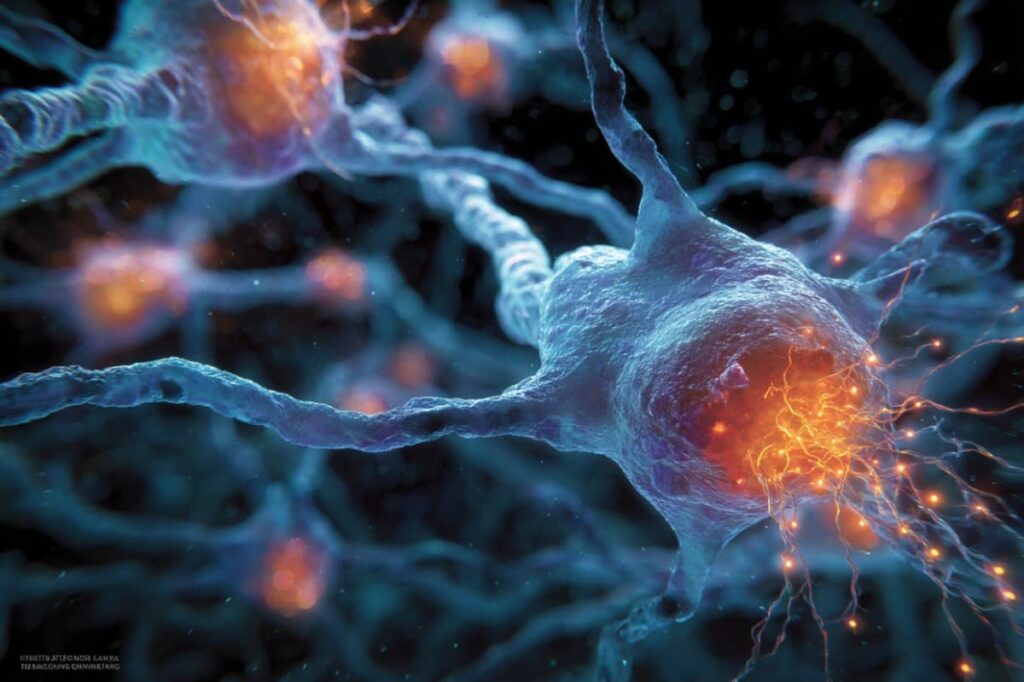
Summary: A new study has identified a mutation in the TREM2 gene that disrupts the brain’s ability to clear toxic amyloid plaques, increasing Alzheimer’s disease risk. The mutation, called T96K, keeps the TREM2 gene in an overactive state that paradoxically weakens microglial “cleanup” activity, especially in females. Using genetically modified mice, researchers discovered that these […]